From the jury room to the shopfront
For most of the nineteenth century, a painter's career passed through a single chokepoint: the Salon jury, which decided what hung, where it hung, and therefore who sold. The jury's verdict was a market signal. A refusal or a poor placement could silence a career for a season; a medal or a prime position on the line could make one. Dealers existed before this system cracked, but they operated mostly as framers, colormen, and print sellers who also happened to move the occasional canvas. They were not yet the ones who decided what was serious.
The break came in the 1860s and accelerated through the 1870s and 1880s. The Salon des Refusés of 1863 demonstrated, involuntarily, that rejected work could draw a crowd. The Impressionists' decision to mount their own group exhibitions — the first in 1874, in the studio of photographer Nadar — tested the idea that a painter could build a public without institutional endorsement. What these alternatives needed, once the jury route was bypassed, was a different infrastructure for sales, reputation and press attention. The dealer filled that vacuum.
Stock, exclusivity and the invented show
Paul Durand-Ruel is the figure who most clearly marks the shift. Starting in the early 1870s, he bought Monet, Pissarro, Renoir and Sisley not picture by picture but in quantity — taking on stock, absorbing risk and, in effect, making a bet on a style rather than on individual works. This was a new kind of relationship. The painter delivered work; the dealer held it, promoted it and released it at a pace he judged. Cash flow moved toward the artist, but control of timing and price moved toward the gallery.
The mechanism that concentrated power most decisively was the one-artist show — a format Durand-Ruel developed and that Ambroise Vollard refined into something close to an annual ritual. Before this, paintings circulated in mixed displays: the Salon hung hundreds together, commercial galleries clustered work from several hands. An exhibition built around a single painter made an argument: this body of work is coherent, it has a development, it repays attention as a whole. Critics came to review not a picture but a career-so-far. Collectors came to see what had changed since last time. The format manufactured the idea of an oeuvre — a sustained output — as something to follow and invest in.
Vollard's shows for Cézanne (1895) and for young Picasso (1901) are the period's clearest examples. Neither painter had the kind of official profile the Salon would have recognized as a career. Vollard imposed coherence on what had been scattered or obscure, and the attention generated by each show pulled critical writing, collector interest and eventually institutional acquisition in its wake.
Exclusivity tied the system together. When a dealer held the primary relationship with a painter — first access to new work, sometimes a monthly stipend against future production — competing dealers could be shut out and prices stabilized. The painter gained a guaranteed income; the dealer gained control over supply. This arrangement was not always or even usually written as a formal contract, but it functioned like one. It made the gallery the authoritative source for work by that painter, and it meant that a gallery's reputation became inseparable from the reputation of its stable.
The consequence was a replication of the jury's power in a different register. Where the jury had been collective, institutional and publicly accountable (if biased), the dealer was private, individual and commercially motivated. What hung on the Salon wall had to pass a vote; what went into a dealer's window had to appeal to one person's judgment and business instincts. The jury had at least to explain itself through its selections; the dealer explained nothing, and explained nothing publicly. Power had moved, but it had not dispersed.
Key figures and operations
- Durand-Ruel
- built the practice of buying stock in volume; introduced the one-artist show to a commercial format
- Vollard
- refined the one-artist show as critical event; his exhibitions for Cézanne and Picasso manufactured career coherence from scattered output
- Nadar
- photographer who lent his studio for the first Impressionist group exhibition, 1874
- Salon des Refusés
- 1863 counter-exhibition of rejected work, which inadvertently proved the audience for non-jury-approved painting
The format manufactured the idea of an oeuvre — a sustained output — as something to follow and invest in.

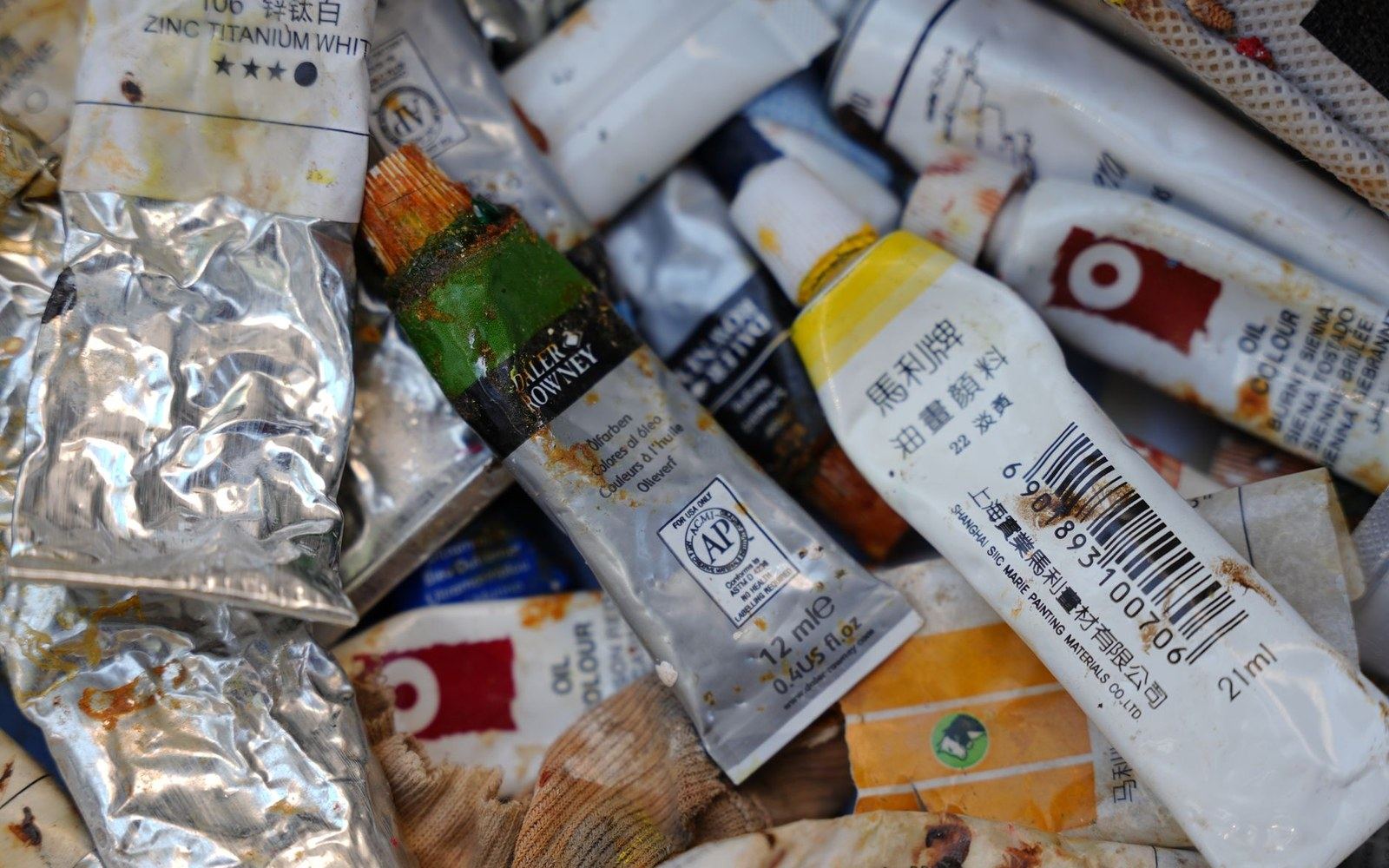
The kit as it was actually bought — ready-ground colour in closable tubes, laid out in the order the painter works.
Photo: ROMAN ODINTSOV / Pexels
The mechanism
- Stock holding
- dealer buys in quantity, absorbs risk, controls timing of release
- Exclusivity
- first access to a painter's output shuts out competitors and stabilizes prices
- The one-artist show
- frames a body of work as a coherent oeuvre; invites critics to address a career, not a single picture

Where the sources disagree, this entry sets the disagreement out rather than resolving it. Nothing here is ranked as greatest or most important; corrections are welcome and are logged at the foot of the entry they change.