The document is not the record — it is the thing
Sol LeWitt did not travel to every wall his work occupied. The instructions he composed for his wall drawings were not preparatory notes but the work itself; the physical execution was, in his own documented understanding, closer to printing than to authorship. Lawrence Weiner made the same position explicit in his 1969 declaration of rights, stating that a work need not be built and that ownership of a piece conferred no obligation to realise it. What both positions share is a deliberate displacement of art's location — away from a handled object and into a set of conditions.
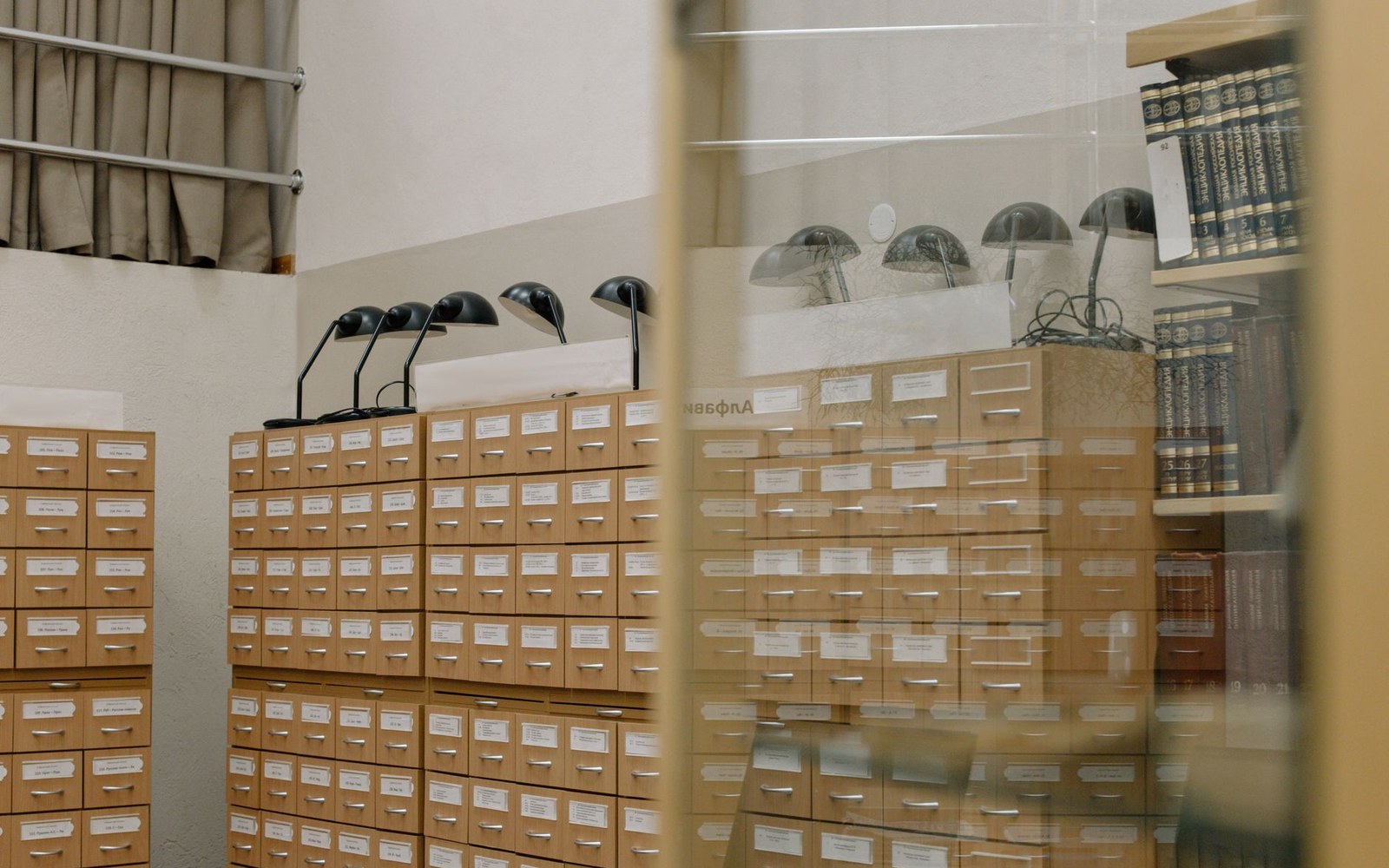
This matters enormously for conservation, because the conservator's traditional object — the paint film, the bronze surface, the stretched canvas — has been replaced by a document. The certificate of authenticity that accompanies a Weiner piece or a Yoko Ono instruction is not evidence of an artwork elsewhere; it is the artwork, or as close to it as a physical thing can get. Institutions that have acquired such works are in the odd position of preserving a piece of paper in order to preserve the permission to make something in another medium entirely.
What survives and what does not
The practical consequence is a hierarchy of degradability that runs in reverse. A Flavin fluorescent tube can be replaced — the estate has confirmed that the specific commercial tubes he used may be substituted as they go out of production — because the work is defined by its light, its geometry and its placement rather than by a particular lamp's molecular structure. But the certificate governing a Weiner or the hand-typed instruction cards Ono distributed in the early 1960s are not replaceable in the same way. Damage or loss there is closer to the destruction of a painting than to the failure of a light fitting.
This inversion troubles the readymade's foundational claim — that selecting or specifying is sufficient for authorship — because it quietly reinstates material preciousness at the documentary level. Institutions conserve the paper with the same anxiety they brought to oil on panel. The logic that was supposed to liberate art from objects has produced a new category of fragile original: the certificate, the declaration, the typed card. Conceptualism dissolved one set of material anxieties and immediately generated another, more paperwork-shaped one, and museums are still working out what that means for storage, insurance and the question of what, exactly, was bought.
The hierarchy of survivability
- Fluorescent tubereplaceable by documented estate approval; the light and geometry define the work
- Certificate of authenticitytreated as primary object; loss approaches destruction, not damage
- Instruction card (typed, artist-distributed)singular, fragile; conservation equivalent to an old-master drawing
- The executed wall drawing or built piececonsidered a performance of the instructions, not the permanent work

Hung floor to cornice, a picture placed high was said to be skied: admitted, and effectively unseen.
Photo: Shakyamuni Buddha with Avadana Legend Scenes - Google Art Project · Wikimedia Commons
Where the sources disagree, this entry sets the disagreement out rather than resolving it. Nothing here is ranked as greatest or most important; corrections are welcome and are logged at the foot of the entry they change.