A container that changed where painting could happen
The collapsible metal tube is not a glamorous object. It is a cylinder of soft metal, sealed at one end, fitted with a screw cap at the other, and pressed flat as the painter squeezes colour out. It did not create a new aesthetic. It did not teach anyone how to see. What it did was mundane, logistical, and transformative: it made paint portable, reliable, and re-sealable, and from that single fact most of the conditions for painting outdoors in the nineteenth century followed directly.
Before the tube, oil colour was sold in pig's bladders — small sacs of animal membrane tied off at the neck, punctured with a tack when paint was needed, and stopped with the same tack afterward. The system worked after a fashion indoors, where the bladder could sit in a controlled environment and be approached by a painter standing at a fixed easel. It worked less well in a field, on a hillside, or at the edge of a harbour, where a tack could be lost, a bladder could burst under pressure, and the whole apparatus had to travel without spilling. Painters made the journey anyway — the tradition of working from nature is older than the tube — but the practicalities were genuinely punishing. Colour mixed in the studio and carried out in a jar hardened on the surface. Ground pigment in oil had a short usable life once exposed. The logistics of painting on the spot were, for much of the early nineteenth century, a significant constraint on what a painter could reasonably attempt.
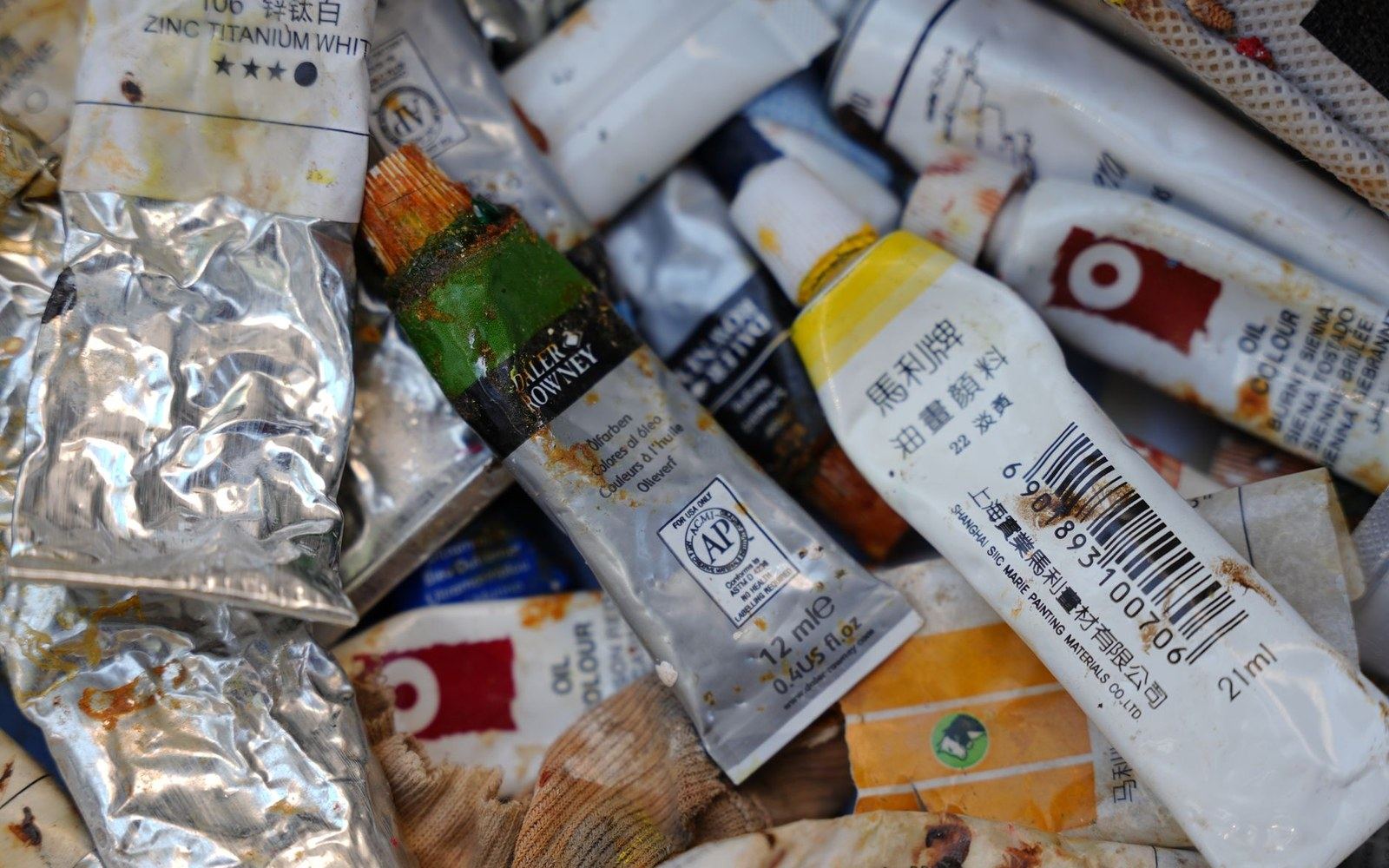
The collapsible tube — lead at first, later tin — was patented in the United States by the portrait painter John Rand in 1841. Rand had been struggling with the same bladder problem in his own practice and designed the tube as a practical fix. The cap allowed colour to be used in small quantities and then sealed against air, preventing skinning. Manufacturers of artists' materials in London and Paris adopted the format rapidly. By the 1850s, the major colourmen — Winsor and Newton in London prominent among them — were filling tubes with ready-ground colour and selling them as part of a coherent portable kit. The paint in those tubes was not merely adequate: the industrial grinding of pigment in oil, done by machine under controlled conditions, produced a consistency that many painters found superior to anything they could achieve by hand on a grinding slab.
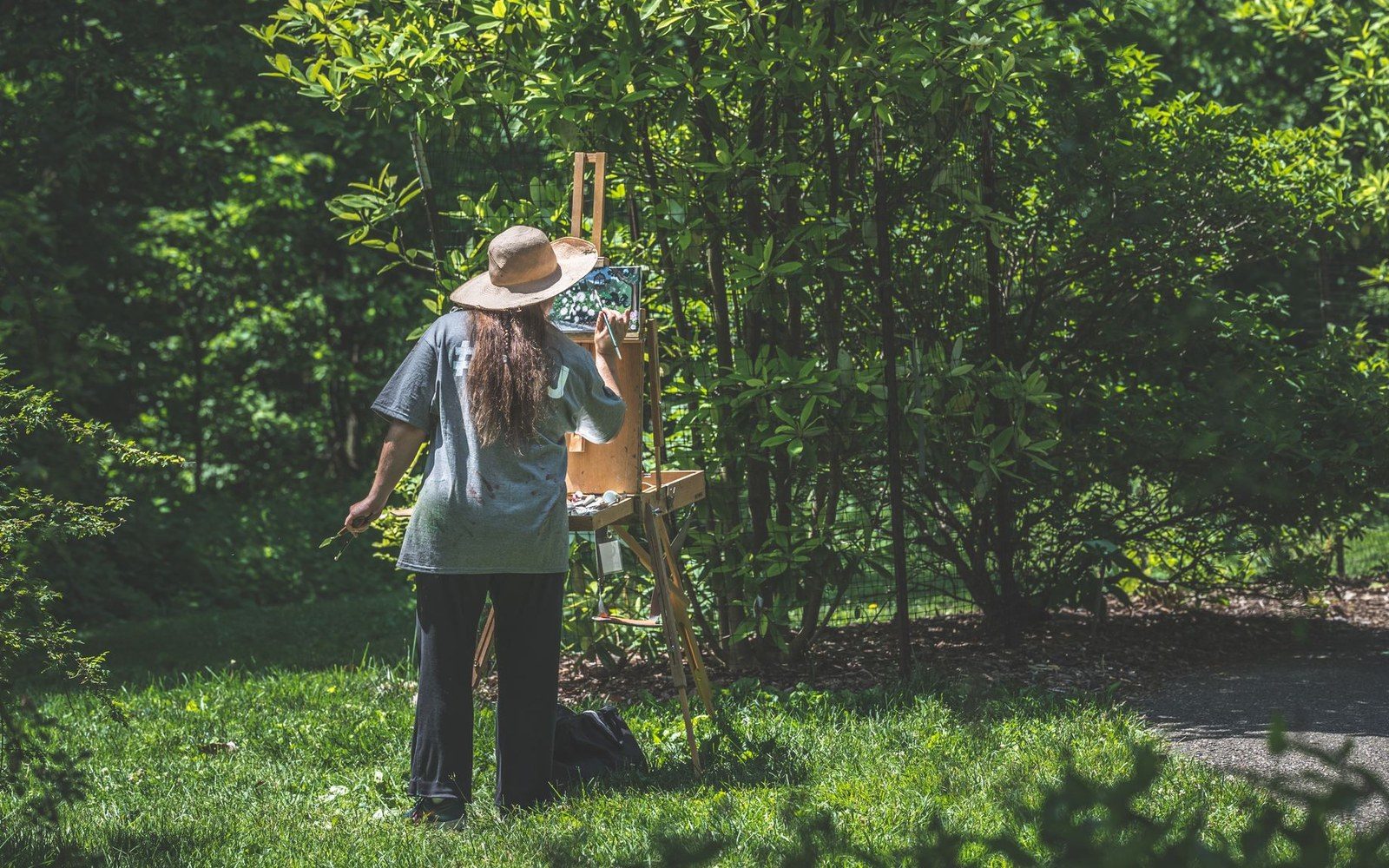
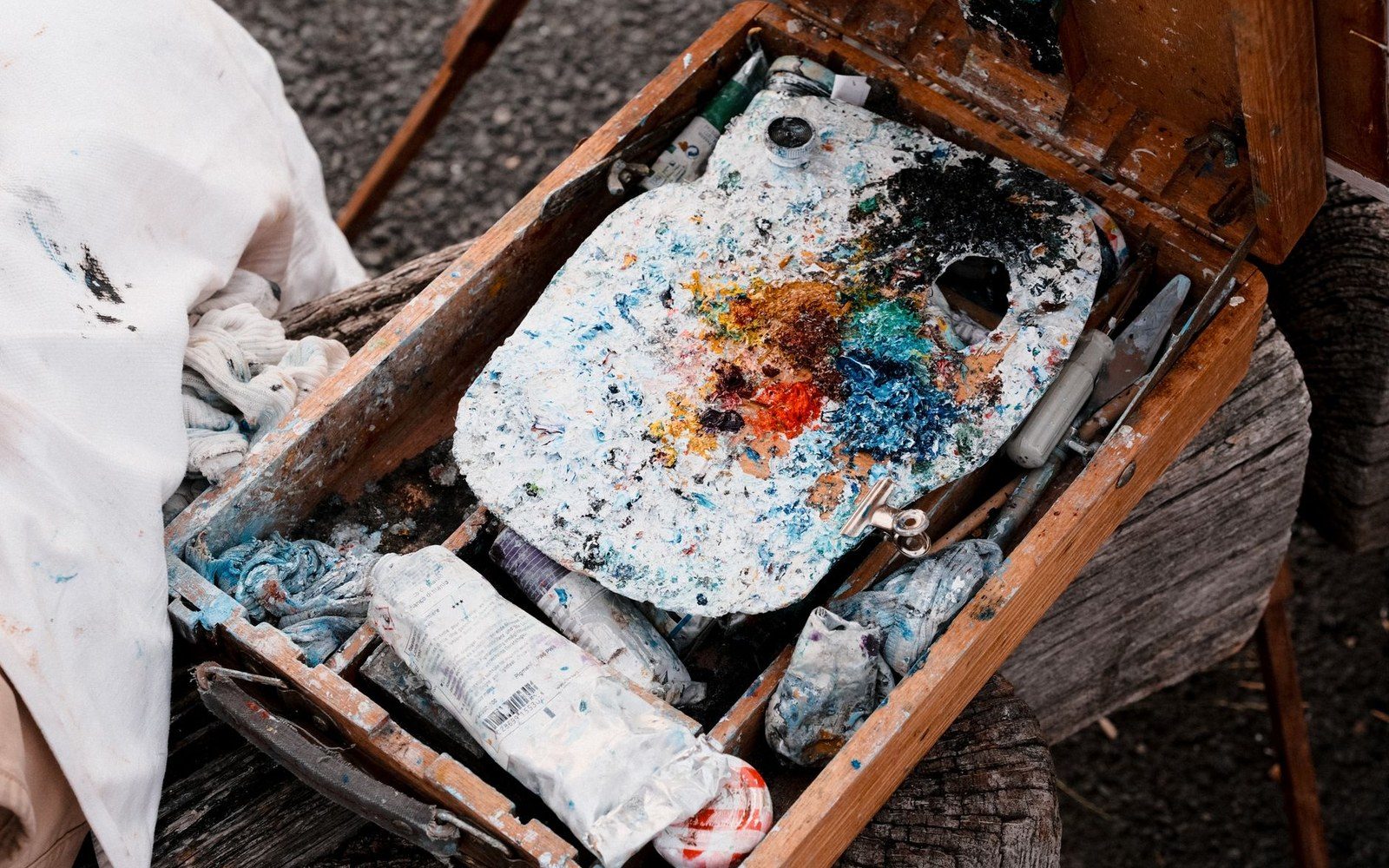
The timing matters. The tube arrived at the same moment as a cluster of other enabling technologies: the portable box easel, with its integrated drawer for panels and tubes; improved rail and road networks that made the countryside reachable from Paris or London in a day; and a new generation of grounds and primings on prepared paper and small wood panels, purpose-made for quick outdoor study. None of these things alone would have shifted the practice of landscape painting. Together, with the tube at the centre of the kit, they lowered the threshold for working outside to a point where it became not an expedition but a routine.
The Barbizon painters — Corot, Daubigny, Rousseau — were already working in the Forest of Fontainebleau before the tube was widely available, but their practice grew considerably easier once it was. The generation that followed, the Impressionists, built an entire aesthetic on the conditions the tube helped produce. The broken, comma-shaped marks that characterise the mature Impressionist surface are partly a stylistic choice and partly an artefact of how tube colour behaves: squeezed directly onto a bristle brush and applied without extended blending, it retains body and edge. There is a physical logic running from the container to the stroke. Whether a given painter was consciously exploiting that logic or simply responding to what the material offered is an interesting question to which no clean answer exists, but the correlation between tube paint, outdoor work, and the handling we now identify as Impressionist is not accidental.
The chrome, cadmium, and cobalt pigments that were entering the market across the same decades were themselves packaged in tubes, and the encounter between saturated synthetic colour and the outdoor scene happened partly because both could now be carried to the same place. The tube did not supply the new colours, but it delivered them.
Chronology
- Before 1841oil colour carried in pig's bladders; unstable, prone to drying and spillage
- 1841John Rand patents the collapsible lead tube in the United States
- 1850s onwardmajor colourmen, including Winsor and Newton, London, producing tube colour at scale
- Mid-to-late 19th centurytube paint standard equipment for Barbizon and Impressionist painters working outdoors
There is a remark, almost certainly apocryphal, that has been attributed to various Impressionist painters — to the effect that without the tube of paint there would have been no Impressionism. No sourced version of this claim exists in documented form, and it is the kind of tidy causality that historians treat with suspicion. It is, however, not far wrong as a structural observation. What the tube actually did was remove the friction between the studio and the landscape. Once that friction was low enough, painters simply went. Where they went, and what they found when they arrived, shaped the next half-century of French and English painting more decisively than almost any theoretical argument did.
The tube also subtly changed the economics of paint. A bladder burst and the colour was lost. A poorly tacked bladder dried overnight. Tube colour that was capped and laid flat had a shelf life measured in months or years, and the loss from a tube was close to zero. This was not trivial for painters working on limited means, and a significant number of them were. The reduction in waste meant that a painter could carry a broader range of colours outdoors without the anxiety that most of them would skin before they were used.
The object itself is so ordinary now — so naturalized into the equipment of painting — that it takes some effort to restore its novelty. A painter standing on a hillside above Pontoise in 1874 with a box easel, a set of Winsor and Newton tubes, and a prepared panel was operating with a material infrastructure that had not existed thirty years earlier. The picture they made was shaped by that infrastructure at every point: the size of the panel (what could be carried), the range of the palette (what came in tubes), the texture of the marks (what tube colour, applied quickly, actually did), and the time available (how long the light held before the session had to end). The tube did not paint the picture. It decided the terms on which the picture got made.
Together, with the tube at the centre of the kit, they lowered the threshold for working outside to a point where it became not an expedition but a routine.
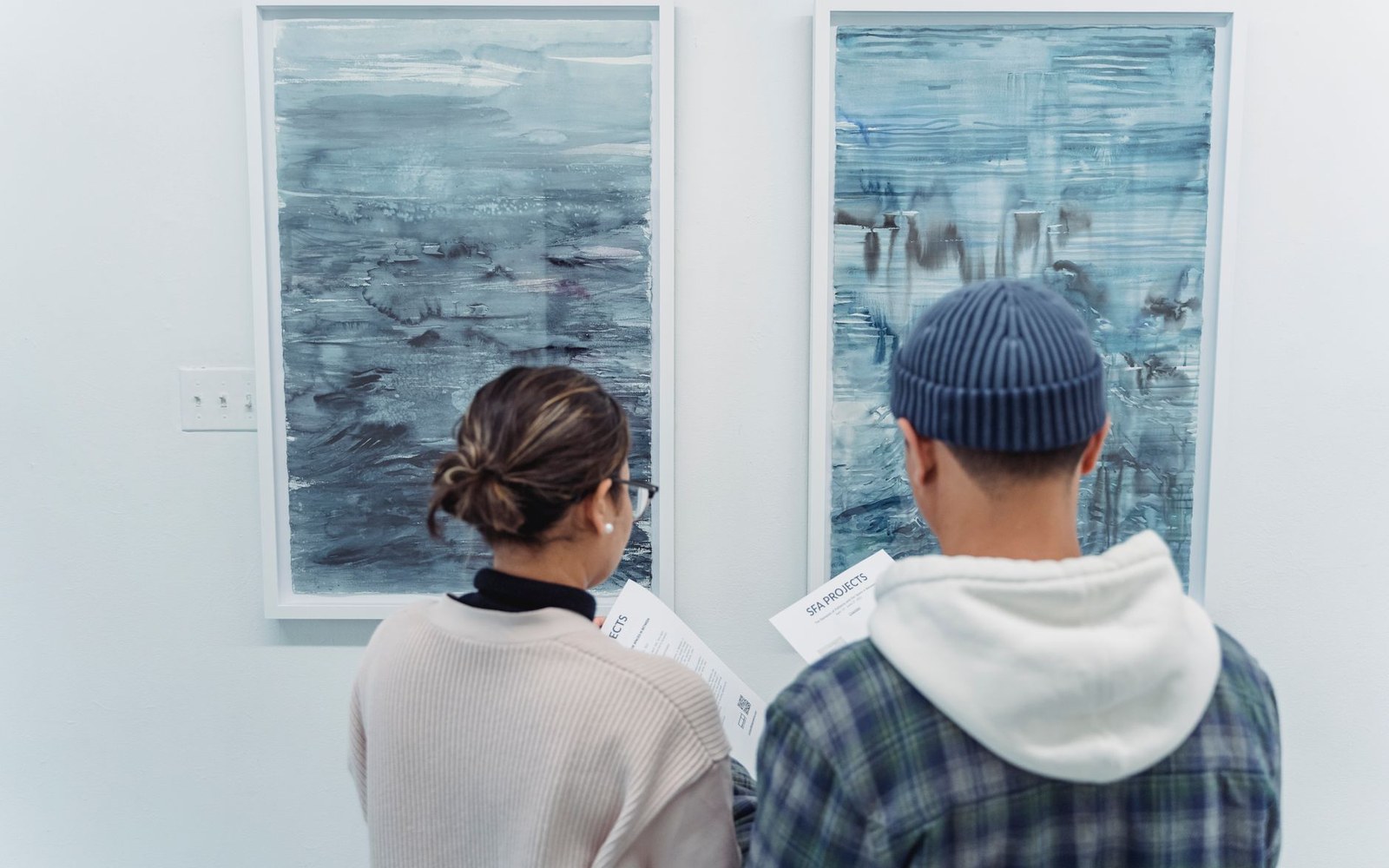
Standing distance is part of the work: a canvas sized to the wall asks the body to move back until the picture resolves.
Photo: Greta Hoffman / Pexels
Materials and method
- Bladder paint
- animal-membrane sac, punctured with a tack; re-sealing unreliable, shelf life poor
- Collapsible tube
- soft metal (lead, later tin), screw cap; paintable in small quantities and sealed against air
- Machine-ground pigment
- industrial consistency; often considered superior to hand-grinding on a slab
- Tube + box easel + prepared panel
- the three-part portable kit that lowered the threshold for outdoor painting
Where the sources disagree, this entry sets the disagreement out rather than resolving it. Nothing here is ranked as greatest or most important; corrections are welcome and are logged at the foot of the entry they change.