When the easel became the wrong tool
The postwar New York painters who worked at monumental scale did not simply make bigger versions of easel pictures. They changed the logic of painting itself — and the change began with the most ordinary hardware-store materials.
The decisive technical move was the adoption of commercial house paint. Enamel and flat-wall paint handled differently from artists' oil: thinner, faster-flowing, and cheap enough to use in volume. Jackson Pollock was buying Duco and Davoe & Reynolds house enamels by the mid-1940s. The consistency of those paints made pouring and dripping a genuinely controllable procedure — far more so than heavily bodied oil colour. The low viscosity let paint travel across a surface as a liquid event rather than a mark, and the speed of drying in enamel meant a layer stabilised before the next pour destroyed it. None of that would have worked with the dense, slow medium sitting on a palette in a tube.
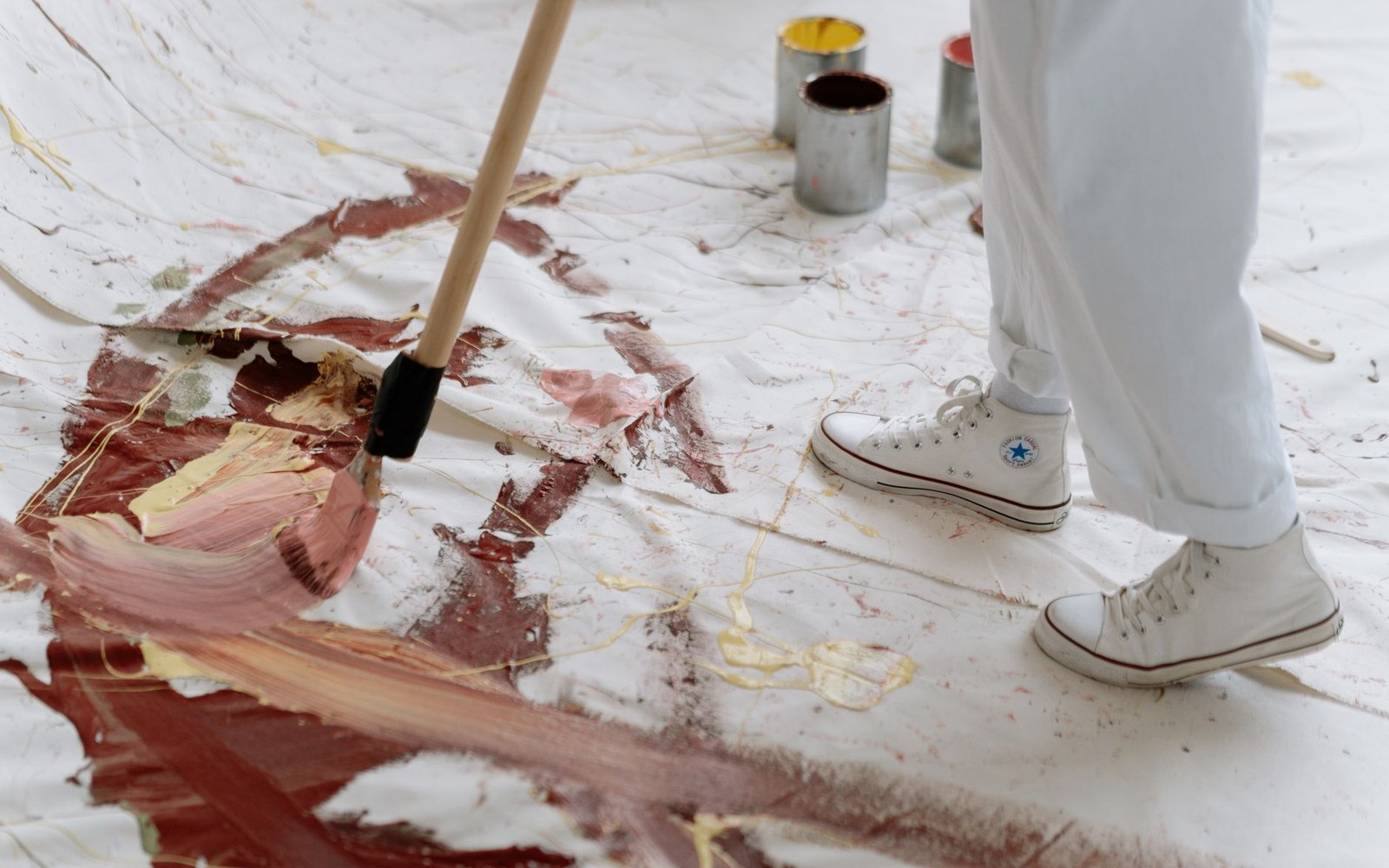
The canvas came down off the wall. Working on a large unstretched canvas laid flat on the floor removed the easel from the equation entirely — and the easel had been the scale-limiting device for centuries. A painter standing at an easel can reach, at most, a metre or so in any direction from a fixed position. A painter moving around the edges and across a canvas on the floor is limited only by the studio's square footage. Pollock's studio in Springs, East Hampton was not large by institutional standards, but the floor was unobstructed, and he worked into it from all four sides, approaching the canvas from whichever angle the composition demanded. Scale became a function of movement — the full reach of the body, sometimes working with sticks and hardened brushes, sometimes pouring directly from the can.
The change in scale was also a change in address. An easel painting at conventional size can be read from a single, relatively stable vantage point, the work arriving within the visual field of a seated or standing viewer who takes it in as a unified image. A canvas eight or twelve feet wide and four or five feet tall, hung or stretched after painting, does something else. It exceeds comfortable peripheral vision at any close distance, forcing the viewer's eye to move rather than settle. The painting becomes environmental in its pressure on the body long before it reaches the literal room-filling scale of what would come later. Standing distance and painting size were now in a relationship that easel practice had never had to negotiate.
Helen Frankenthaler extended the logic differently. Working on raw, unprimed cotton duck — canvas that had received no ground — she poured thinned paint directly so that it soaked into the weave rather than sitting on a sealed surface. This technique, developed in the early 1950s, gave the colour the character of a stain rather than a film: the paint and the canvas became one material rather than two. The grounds and primings question was not merely practical. Leaving the ground out was a statement about where the image lived — inside the cloth, not on top of it.
The size of a finished work also changed the economics and practicalities of transit. A rolled unstretched canvas can travel; a pre-stretched monumental painting cannot easily leave the studio without a freight van. Dealers and museums found themselves negotiating access to studios and arranging stretching on-site. The picture's physical life — how it moved through the world — became a logistics problem that conventional studio practice had never generated.
Materials and method
- Duco / Davoe & Reynolds enamels
- commercial house paints used for their low viscosity and high volume; not formulated for archival permanence
- Unstretched canvas
- raw fabric laid flat, worked from all sides; stretched only after painting, or shipped rolled to be stretched on arrival
- Raw cotton duck, unprimed
- Frankenthaler's ground of choice; accepts thinned paint as a stain rather than a surface film
- Staining vs. painting
- the difference between colour absorbed into the weave and colour sitting on a sealed ground
What matters here is the sequence. House paint enabled a particular viscosity and volume. That viscosity made floor-working possible. Floor-working removed the constraint on width. The removal of scale constraint changed the relationship between picture and viewer. Each step was material before it was aesthetic, and the aesthetic argument followed from what the hardware allowed.
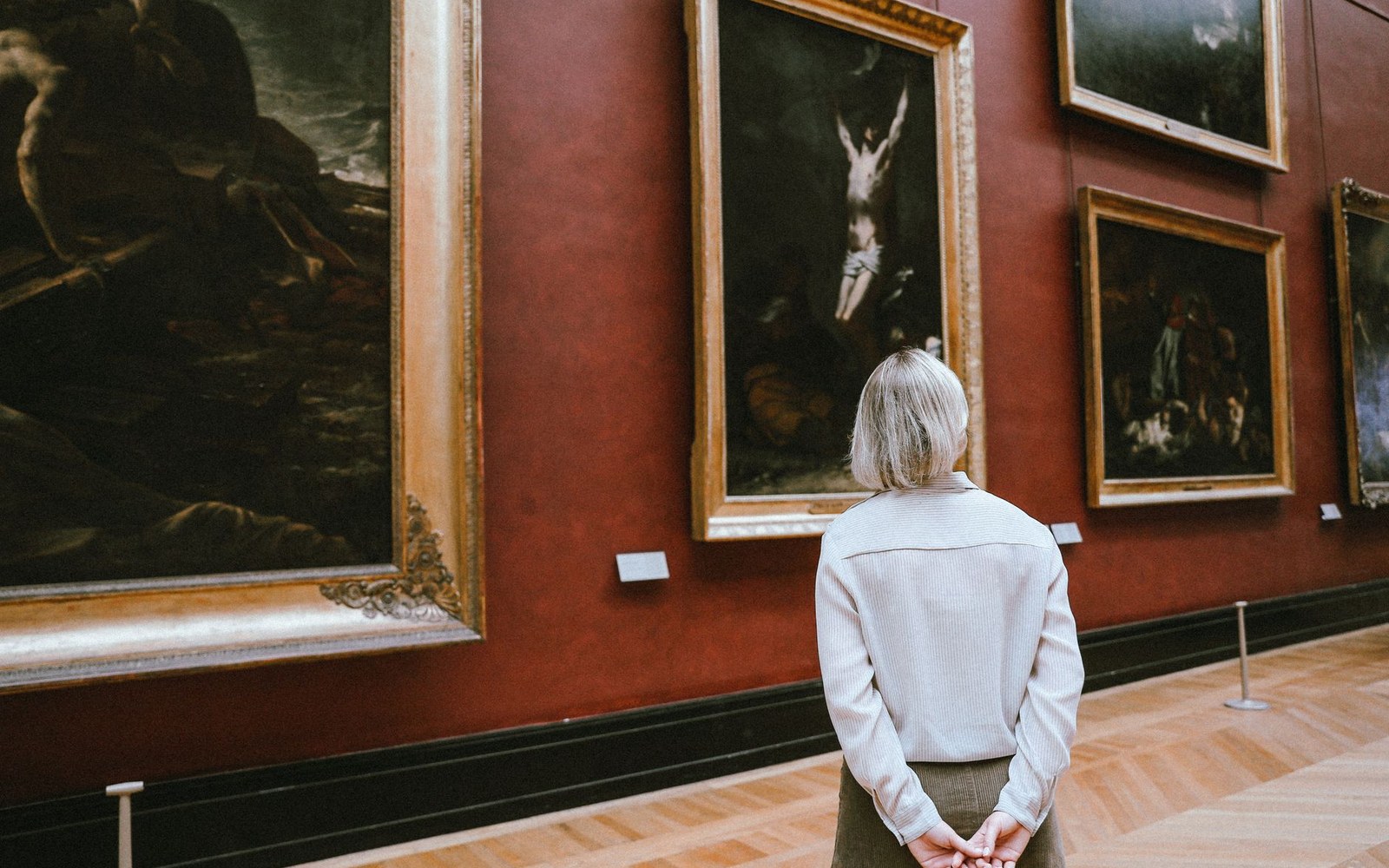
It exceeds comfortable peripheral vision at any close distance, forcing the viewer's eye to move rather than settle.

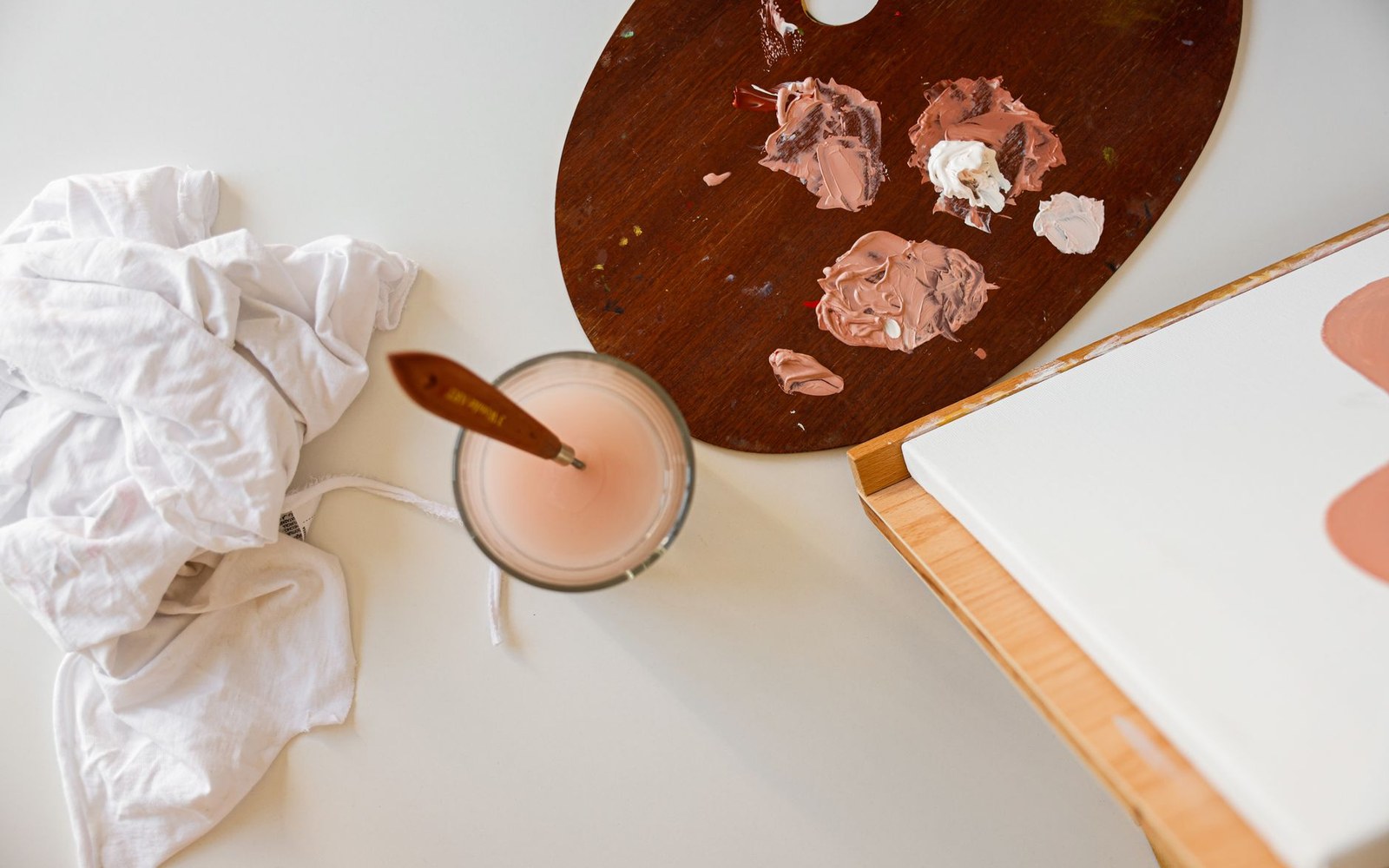
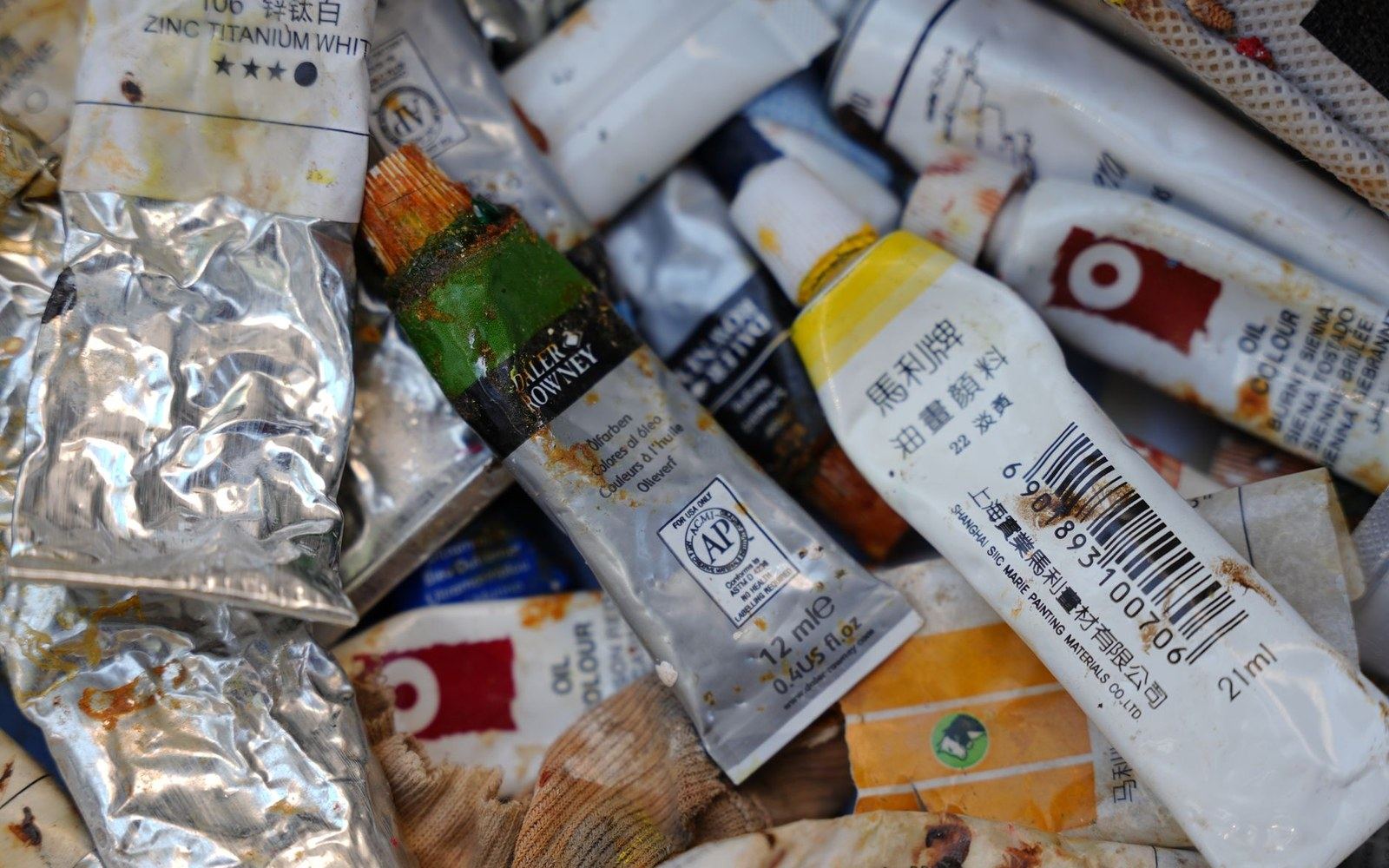
The kit as it was actually bought — ready-ground colour in closable tubes, laid out in the order the painter works.
Photo: ROMAN ODINTSOV / Pexels
Chronology
- Mid-1940sPollock adopting commercial enamels; drip and pour method develops alongside
- Early 1950sFrankenthaler works out the soak-stain technique on unprimed duck
- Later 1950s onwardmonumental scale becomes a recognised condition of postwar American painting, absorbed into museum and dealer logistics

Where the sources disagree, this entry sets the disagreement out rather than resolving it. Nothing here is ranked as greatest or most important; corrections are welcome and are logged at the foot of the entry they change.