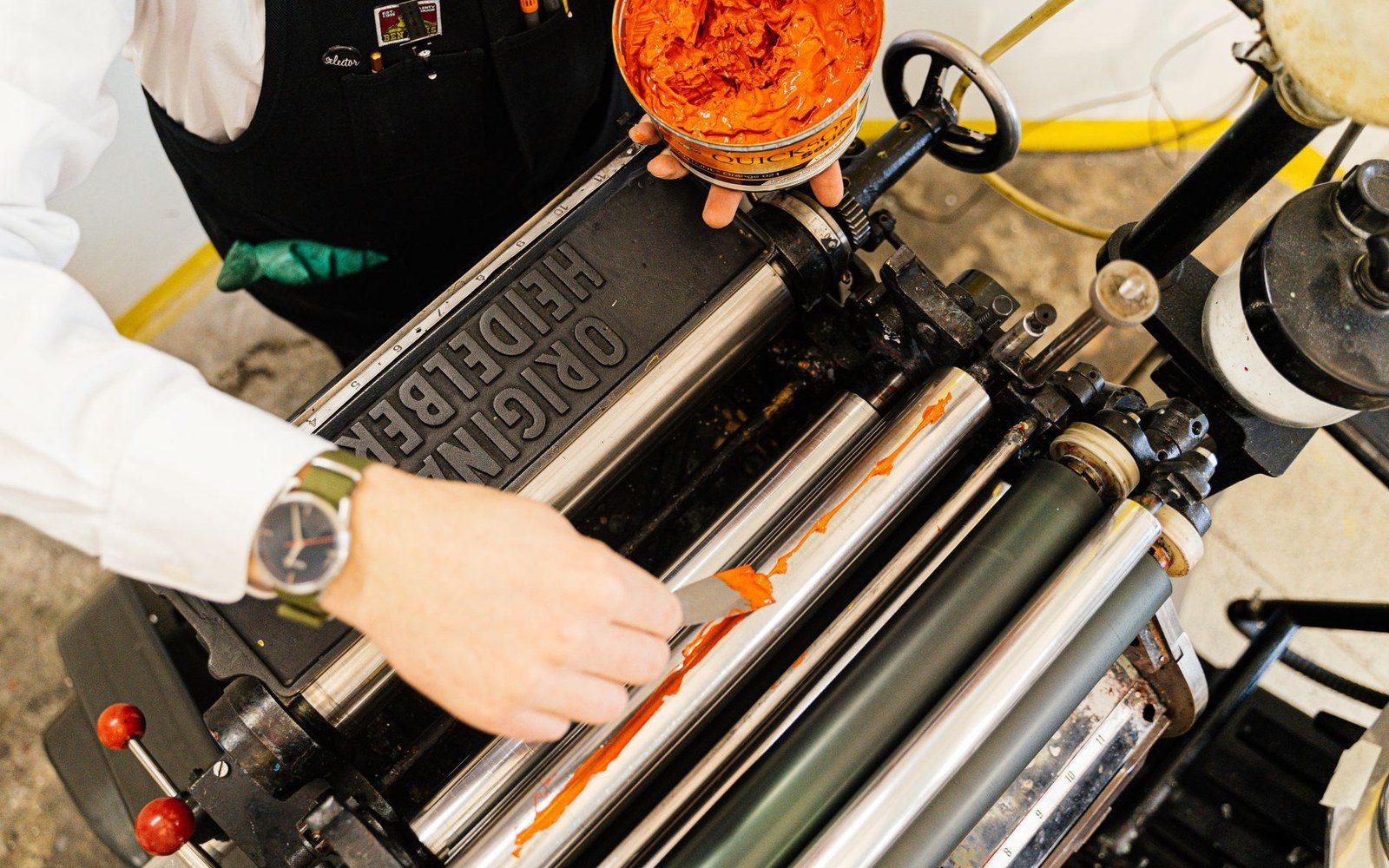
The specification is the act
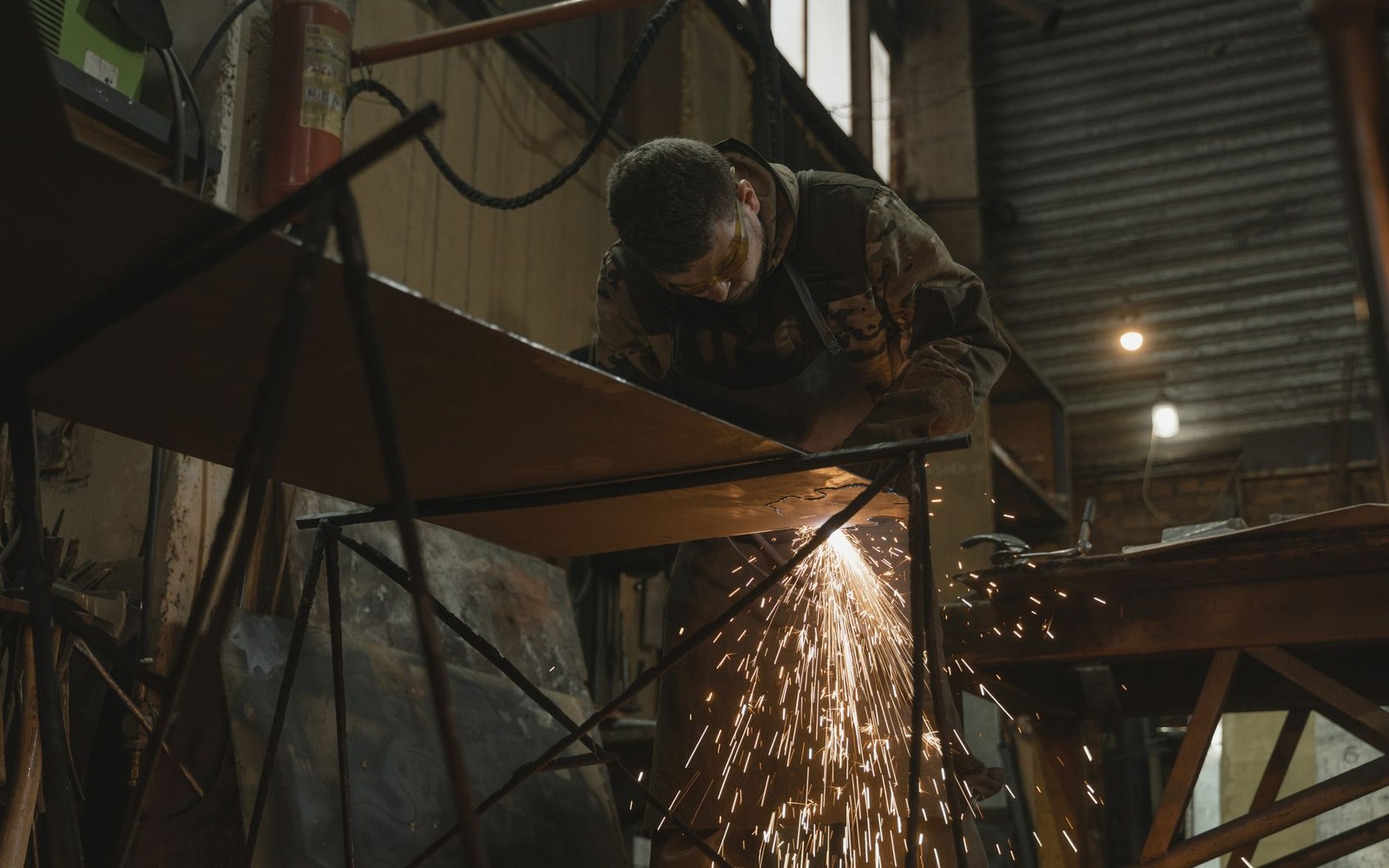
For most of Western art history, the artist's touch was the proof of authorship. A painting carried its maker in every brushstroke; a sculpture bore the chisel's evidence. What changed in the 1960s was not simply scale or material — it was the deliberate removal of that evidence. Artists began sending drawings and written specifications to industrial fabricators: sheet-metal shops, plastics manufacturers, neon-sign benders, concrete pourers. The fabricator built the object. The artist did not touch it.
This was not subcontracting in the old sense. A Renaissance workshop master directed assistants who were trained in the same tradition; the hands differed but the method was shared. Industrial fabrication breaks that continuity entirely. The shop operates by engineering tolerances, not by craft apprenticeship. A bending radius is specified in millimetres; a surface finish is called out by grade number. The artist must learn enough of the fabricator's language to write an unambiguous order, because ambiguity at that stage produces an object no one ordered.
Donald Judd made the logic explicit. He argued that manual skill was simply not the relevant criterion — that an idea could be realised by anyone with the right equipment, and that the physical identity of the object was fixed by the specification, not by who operated the machine. His stacks and progressions were made in metal and Plexiglas by commercial shops in New York and later in Switzerland. The specification was precise enough that the objects could be re-fabricated if destroyed — and several have been, under estate authorisation.
What the drawing has to carry
Removing the hand does not simplify the process; it concentrates all the decisions into the drawing and the written call-out. An artist working with a fabricator must resolve, in advance, every question that a painter can answer mid-stroke. What alloy? What gauge? Welded or bolted, and if welded, ground flush or left proud? Powder-coated, anodised, or polished to what degree of reflectivity? Each choice is permanent once the shop starts cutting.
This is where the intellectual content of the work either holds or fails. A vague specification produces an object that drifts from the artist's conception without either party being aware of it. A precise one — detailed enough that a competent fabricator in a different city could produce an identical result — is itself a kind of drawing, one that must anticipate fabrication errors and material tolerances. Dan Flavin's fluorescent-light works depended on commercially available tube sizes and fittings; when manufacturers discontinued particular tubes, the works became materially unstable in ways no specification could have prevented. The industrial supply chain entered the work's biography.
What exactly survives when the certificate is the object — whether it is the specification, the authorised re-fabrication, or the first instance — remains a genuine dispute in conservation and scholarship.
How it worked in practice
- Specification
- a written and drawn document precise enough that a fabricator can build the object without further instruction; the equivalent of an engineering drawing
- Tolerance
- the permitted range of deviation from a specified dimension; what separates a "close enough" surface from a rejected one
- Re-fabrication
- rebuilding a work from its original specification after loss or damage; raises authorship questions the hand-made object does not
The question of the hand, revised
None of this means the artist's hand vanishes. It migrates. The hand that once mixed and applied now draws, measures, specifies and approves. Shop visits replace studio sessions; a rejected surface sample is a decision as consequential as a repainted passage. The fabricator's skill is real and it shapes the object — a badly welded seam, a slightly wrong radius — but it is skill in the service of a specification it did not author.
What industrial fabrication actually does is expose how much of authorship was always conceptual. The Salon painter who stretched a canvas, ground pigments and applied every touch still made hundreds of decisions before brush met ground; the fabricating artist makes the same order of decisions, just at a different moment in the process. The romantic mythology of the solitary hand was always a partial account. Fabrication makes that partiality visible, which is part of what made it, in its moment, so unsettling.
Removing the hand does not simplify the process; it concentrates all the decisions into the drawing and the written call-out.

Hung floor to cornice, a picture placed high was said to be skied: admitted, and effectively unseen.
Photo: Shakyamuni Buddha with Avadana Legend Scenes - Google Art Project · Wikimedia Commons
Chronology of the key shift
- Early 1960sartists in New York begin placing fabrication orders with commercial metal and plastics shops
- Mid-1960sJudd, Flavin and others articulate the logic publicly; fabrication becomes associated with Minimalism as a movement
- 1970s onwardestates and institutions develop protocols for authorised re-fabrication and edition control

Where the sources disagree, this entry sets the disagreement out rather than resolving it. Nothing here is ranked as greatest or most important; corrections are welcome and are logged at the foot of the entry they change.