The body as measuring instrument
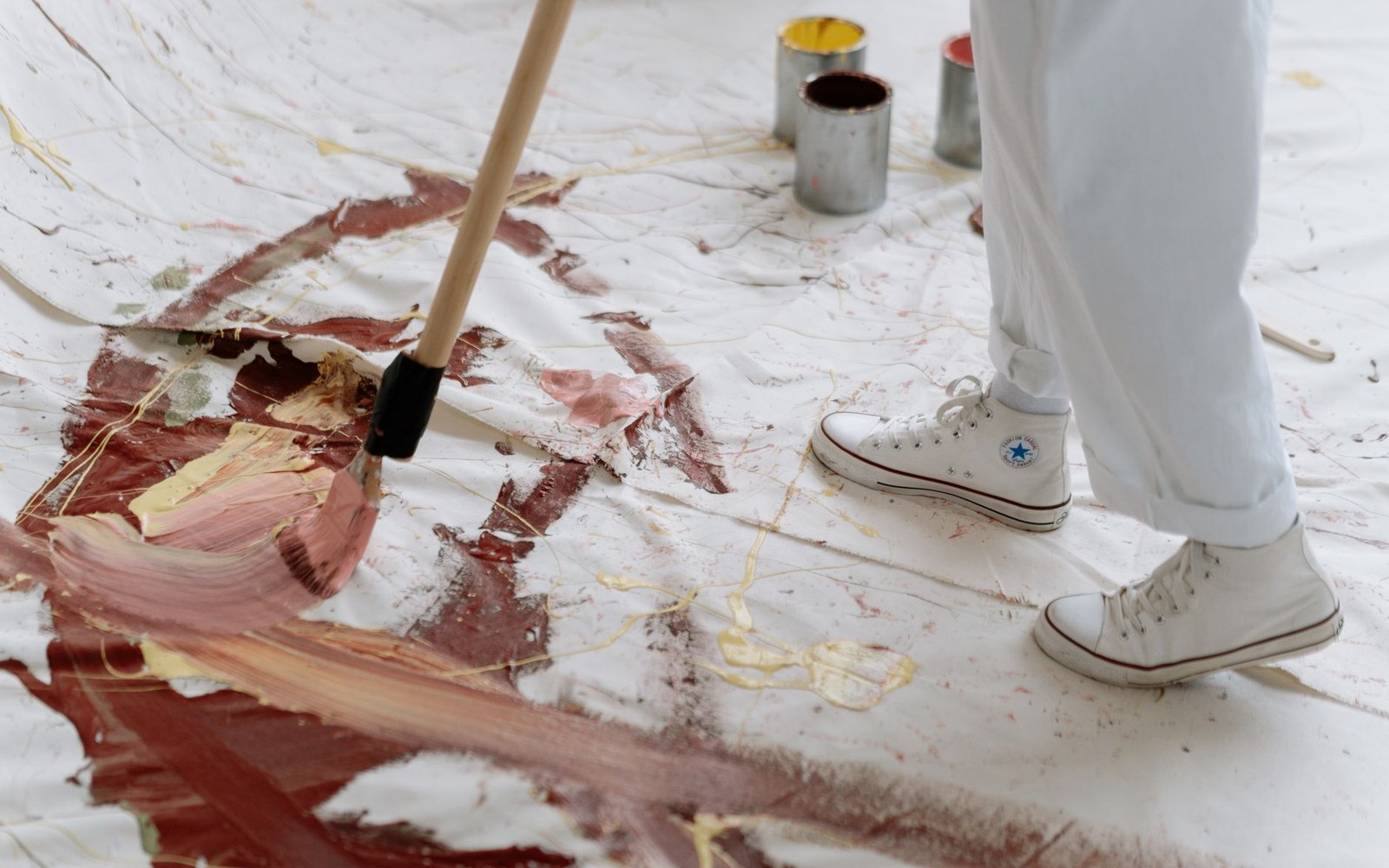
A small panel painting holds its illusion at arm's length. Scale it up past a certain threshold — roughly the span of peripheral vision — and the image no longer sits in front of you; it surrounds you. That shift is not a matter of taste. It is physiology, and painters from the Baroque decorators onward understood it well enough to exploit it, even if they described it in terms of grandeur rather than optics.
What changed in the postwar period was the deliberate application of that threshold as a formal position. When Barnett Newman began working at dimensions that exceeded two metres in height, the canvas stopped behaving like a portable object. Viewers backed toward the gallery wall, then ran out of room. The painting refused to resolve into a unified image from any comfortable social distance. That refusal was the content.
Mark Rothko, working at similar scale, went further: he specified low lighting and close hanging, engineering the distance at which his rectangles of thinned pigment ceased to read as colour-field abstractions and began to feel enveloping. The viewing distance was not incidental. It was part of the instruction, as surely as the pigment or the grounds and primings beneath it.

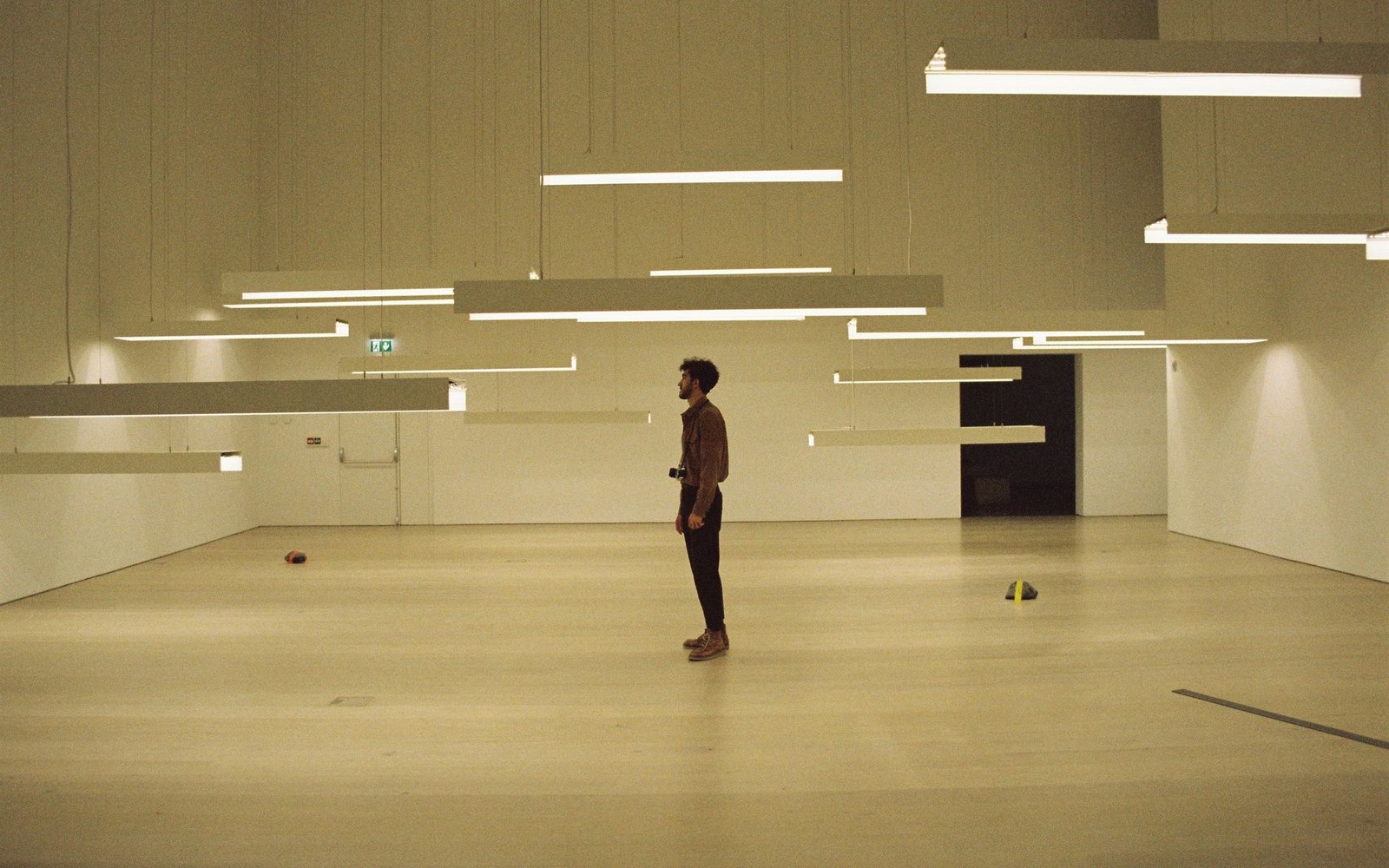
Scale of this kind carries institutional consequences. A canvas requiring eight metres of clear sight line cannot exist in a domestic interior or a conventional dealer's back room. It demands the white cube, the corporate atrium, or the purpose-built museum gallery. The work thus selects its own venue — and, by extension, its own audience — before anyone hangs it. Choosing to paint by the gallon was, among other things, choosing who would ever own the result.
The standing distance, in other words, is not just where you look from. It is a decision about who gets to look at all.
Scale thresholds
- arm's length
- the distance at which a small panel painting holds a viewer; the work remains a portable object
- peripheral-vision threshold
- roughly the point at which a canvas begins to exceed the viewer's visual field; the image starts to surround rather than face
- sight-line requirement
- the clear floor distance a very large canvas demands before the image can be read at all
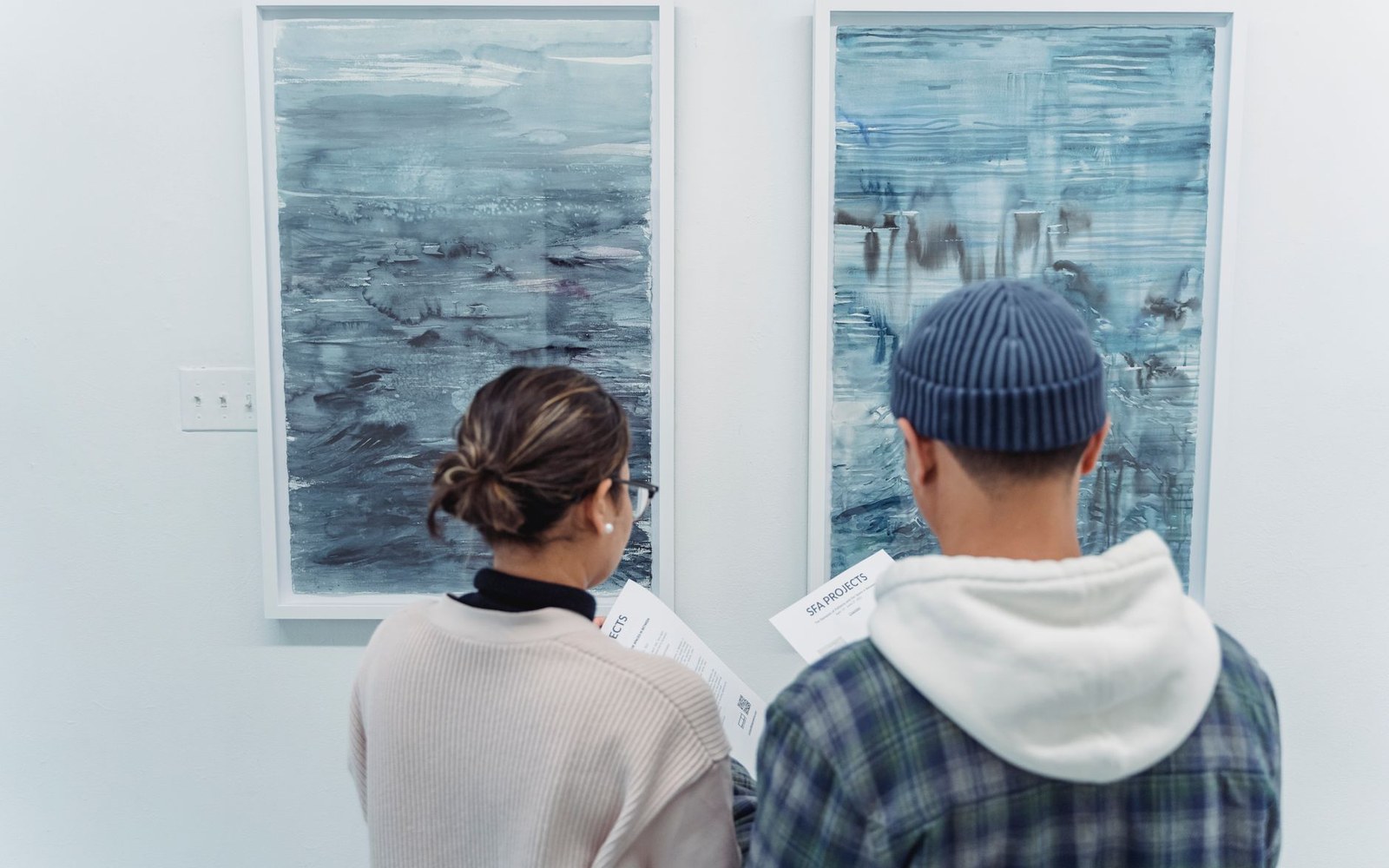
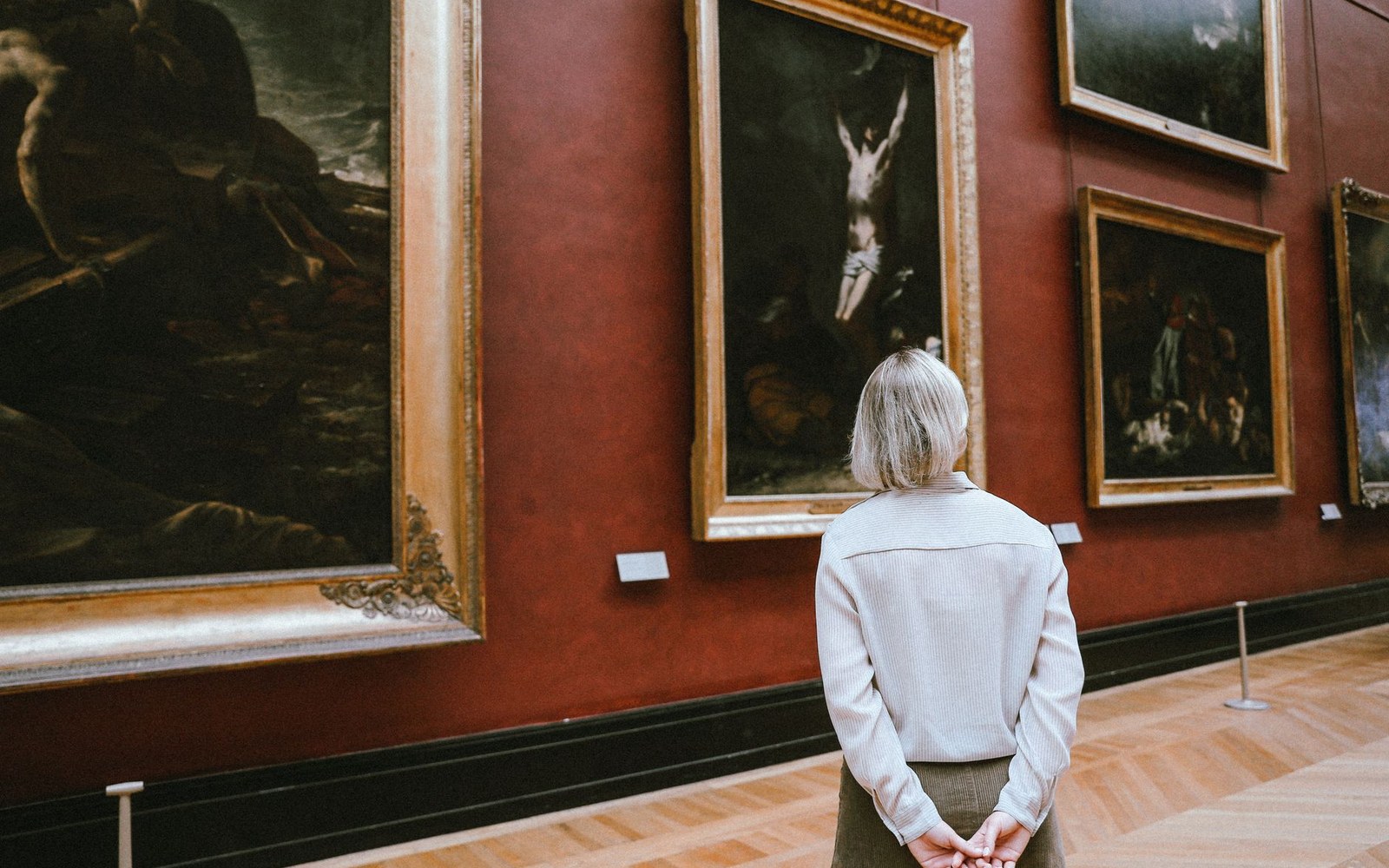
Standing distance is part of the work: a canvas sized to the wall asks the body to move back until the picture resolves.
Photo: Greta Hoffman / Pexels
Where the sources disagree, this entry sets the disagreement out rather than resolving it. Nothing here is ranked as greatest or most important; corrections are welcome and are logged at the foot of the entry they change.